Key Developments
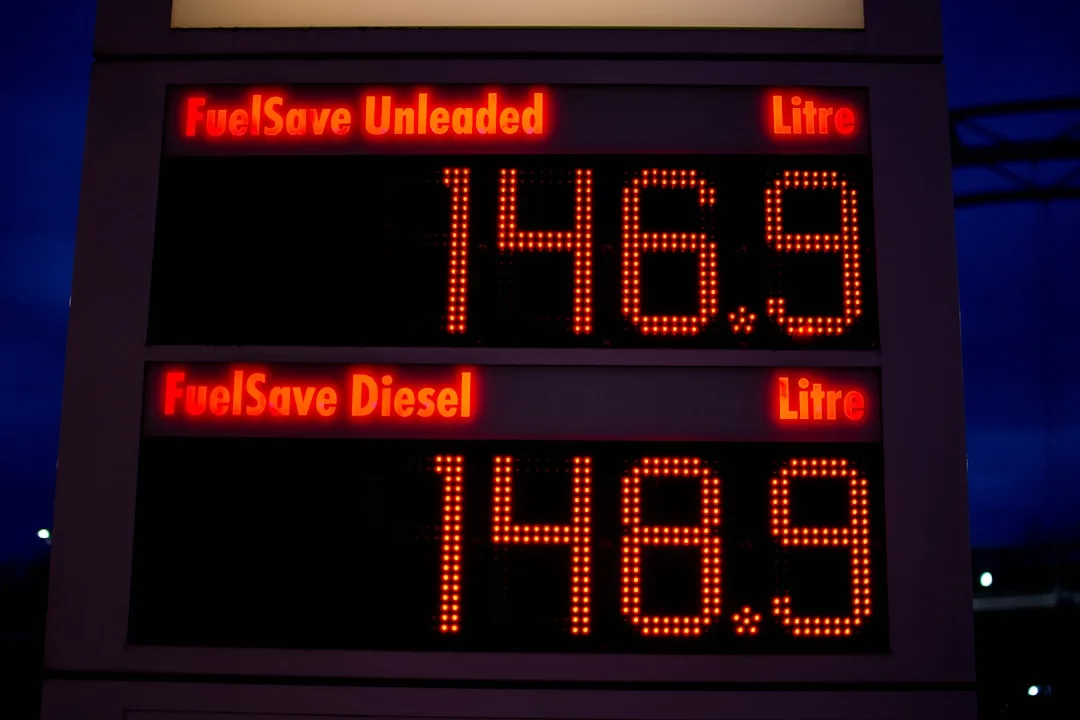
American motorists experienced unprecedented fuel costs over the Labor Day weekend in 2026. The national average price for regular gasoline reached $4.15 per gallon on Labor Day itself, a penny higher than the $4.14 average leading into the holiday. This figure significantly surpassed the previous Labor Day record of $3.82 set in 2012 and was nearly a dollar higher than prices observed in 2025. Notably, gas prices had never before topped $4 per gallon on Labor Day, though the current average remains below the all-time national record of $5.02 a gallon from June 2022.
Diesel fuel also reached an all-time national average record, hitting $5.85 a gallon on the Friday before Labor Day and climbing to $5.90 a gallon by Monday. This surge in diesel prices directly impacts transportation costs for freight delivery systems, with increased expenses being passed on to consumers for goods ranging from groceries to package deliveries.
The primary driver behind these elevated prices is geopolitical instability. Prices surged following a U.S. and Israel attack on Iran in February 2026, which led to a significant plunge in crude oil traffic through the critical Strait of Hormuz. Iran's subsequent refusal to reopen the waterway has kept energy markets volatile. Tom Seng, a professor of energy finance at Texas Christian University, directly attributed the situation to "the Iran War and the Strait of Hormuz."
Beyond the Middle East, other global factors are contributing to the unpredictable market. Ukrainian drone attacks on Russian refineries are tightening diesel supplies, while Chinese refiners are also reporting declining outputs, according to Matthew Metzgar, a clinical professor of economics at UNC Charlotte. Domestically, U.S. refineries are operating at 98% capacity, many under unusually harsh Texas heat, raising concerns that any operational issues or hurricane-related disruptions could further hinder price drops. Energy Secretary Chris Wright acknowledged the higher prices compared to Labor Day 2025, stating the administration is "doing everything we can to push them down," though he offered few specifics on when relief might be expected.
Key Takeaways
- U.S. regular gasoline prices hit a record $4.15 per gallon for Labor Day 2026, while diesel reached an all-time high of $5.90 per gallon.
- The surge is largely attributed to disruptions in crude oil traffic through the Strait of Hormuz following a U.S.-Israel attack on Iran in February.
- Global refinery challenges, including Ukrainian drone attacks on Russian facilities and declining Chinese outputs, alongside high U.S. refinery capacity, contribute to ongoing price volatility.
Why It Matters
The record-high fuel prices directly impact American households and the broader economy. Elevated diesel costs, in particular, translate into higher prices for consumer goods and services, as increased transportation expenses are passed down the supply chain. The situation underscores the profound influence of international geopolitical events, such as the conflict involving Iran and the disruption of key shipping lanes, on global energy markets and domestic economies.
While gas prices typically decline as the summer driving season concludes and refineries switch to less expensive winter blends, the confluence of ongoing Middle East tensions, global refinery output issues, and domestic refinery capacity concerns makes the future trajectory of fuel prices highly uncertain. This unpredictability poses significant challenges for economic planning and consumer budgeting.
Comments